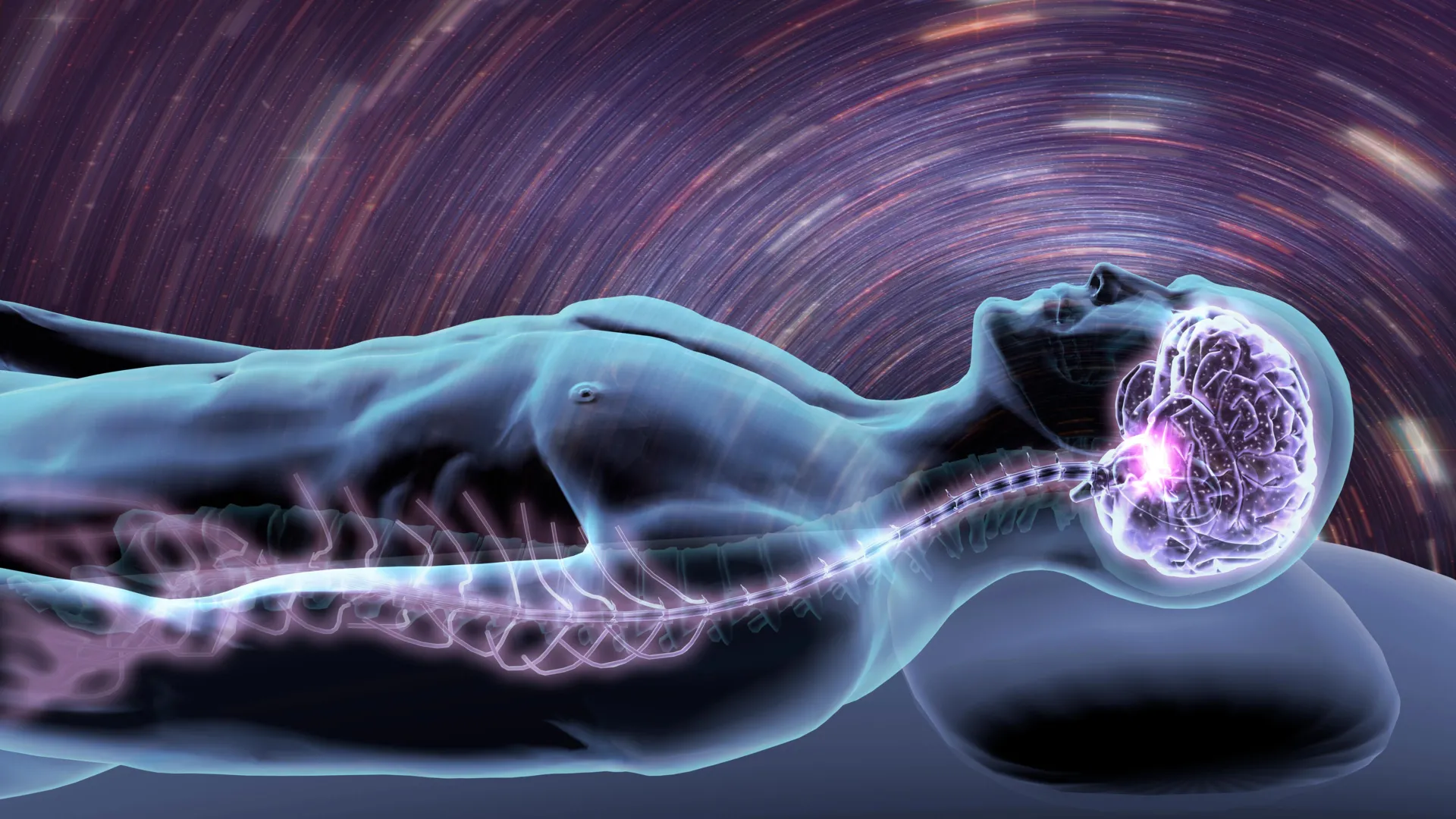
* Stanford Medicine's SleepFM AI system analyzes sleep data to predict the risk of over 100 medical conditions. * Trained on nearly 600,000 hours of polysomnography from 65,000 individuals, SleepFM learns the "language of sleep." * The AI identifies strong predictive links for conditions like cancers, neurological disorders (Parkinson's, dementia), and cardiovascular diseases. * This research represents a significant leap in leveraging AI for proactive health monitoring and early disease detection, utilizing previously underanalyzed physiological signals.
A restless night often leaves individuals feeling tired the following day, yet its implications may extend far beyond immediate fatigue, potentially signaling underlying health issues that could manifest much later. In a significant advancement, scientists at Stanford Medicine, in collaboration with other institutions, have engineered an artificial intelligence (AI) system designed to scrutinize an individual's physiological signals during a single night's sleep. This innovative system, dubbed SleepFM, holds the remarkable capability to estimate a person's susceptibility to developing more than 100 distinct medical conditions.
This groundbreaking research, originally highlighted by Science Daily AI, marks a pivotal moment in the intersection of sleep science, artificial intelligence, and proactive healthcare. By transforming how medical professionals might interpret nocturnal data, SleepFM paves the way for earlier disease detection and more personalized preventative strategies.
The Uncharted Depths of Sleep Data: Polysomnography's Potential
The foundation of SleepFM's predictive power lies in its training data: an immense collection of nearly 600,000 hours of sleep recordings sourced from 65,000 diverse individuals. These comprehensive recordings were obtained through polysomnography (PSG), a sophisticated sleep test recognized as the gold standard for evaluating sleep patterns. Typically conducted overnight in a specialized laboratory setting, PSG employs an array of sensors to meticulously monitor a multitude of bodily functions. These include intricate brain activity, the rhythm of heart function, subtle breathing patterns, rapid eye movements, leg motion, and a host of other vital physical signals that unfold during sleep.
While polysomnography is routinely utilized for diagnosing various sleep disorders, researchers have long recognized its untapped potential. The test captures a vast reservoir of physiological information that, until now, has rarely been subjected to comprehensive analysis. Dr. Emmanual Mignot, MD, PhD, the Craig Reynolds Professor in Sleep Medicine and a co-senior author of the new study published in Nature Medicine, underscored the richness of this data. "We record an amazing number of signals when we study sleep," Dr. Mignot stated. "It's a kind of general physiology that we study for eight hours in a subject who's completely captive. It's very data rich." This abundance of information, however, has historically presented a challenge, as only a fraction of it is typically examined in routine clinical practice.
From Raw Signals to Actionable Insights: The AI Advantage
The sheer volume and complexity of polysomnography data have historically limited its full utility. Traditional manual analysis is labor-intensive and often focuses only on specific, pre-defined markers relevant to known sleep disorders. However, recent breakthroughs in artificial intelligence have revolutionized the ability to process and interpret such large and intricate datasets. The Stanford team's work stands out as the first to apply AI to sleep data on such an unprecedented scale, unlocking insights that were previously unattainable.
Dr. James Zou, PhD, associate professor of biomedical data science and another co-senior author of the study, highlighted the relative lack of AI focus on sleep compared to other medical fields. "From an AI perspective, sleep is relatively understudied. There's a lot of other AI work that's looking at pathology or cardiology, but relatively little looking at sleep, despite sleep being such an important part of life," Dr. Zou observed. This gap presented a unique opportunity for the Stanford researchers to leverage cutting-edge AI methodologies to explore the hidden diagnostic potential within sleep recordings.
SleepFM: Learning the "Language of Sleep" with Foundation Models
To extract meaningful insights from the expansive dataset, the researchers engineered SleepFM as a foundation model. This advanced type of AI is specifically designed to discern broad, underlying patterns from exceptionally large datasets, subsequently applying this acquired knowledge to a diverse array of tasks. The concept is analogous to large language models (LLMs) such as ChatGPT, which learn intricate patterns from vast amounts of text. However, instead of text, SleepFM is trained on complex biological signals, effectively learning the "language of sleep."
The training regimen for SleepFM involved 585,000 hours of polysomnography data meticulously collected from patients evaluated at various sleep clinics. Each extensive sleep recording was segmented into five-second intervals, which function much like individual "words" or tokens used to train language-based AI systems. This segmentation allowed the model to process and understand the sequential and temporal relationships within the physiological data. "SleepFM is essentially learning the language of sleep," Dr. Zou explained, emphasizing the model's ability to interpret the nuanced dialogue between different bodily systems during rest.
Harmonizing Diverse Data Streams
A critical technical innovation in SleepFM's development was its capacity to integrate and harmonize multiple streams of physiological information. This includes brain signals, intricate heart rhythms, subtle muscle activity, precise pulse measurements, and the dynamics of airflow during breathing. The model then learns how these disparate signals interact and influence one another. To facilitate this deep understanding, the researchers devised a specialized training methodology known as "leave-one-out contrastive learning." This approach involves systematically removing one type of signal at a time and then challenging the model to accurately reconstruct the missing information using only the remaining data. This process compels SleepFM to develop a robust understanding of the interdependencies and correlations between all the monitored physiological parameters.
"One of the technical advances that we made in this work is to figure out how to harmonize all these different data modalities so they can come together to learn the same language," Dr. Zou elaborated. This ingenious training technique allows SleepFM to build a holistic representation of an individual's sleep physiology, moving beyond isolated measurements to a comprehensive understanding of the body's nocturnal symphony.
Predicting Future Disease: A Paradigm Shift in Healthcare
Following its intensive training, SleepFM was initially adapted and rigorously tested on standard sleep assessments, demonstrating its proficiency in tasks such as accurately identifying sleep stages and evaluating the severity of sleep apnea. In these foundational tests, SleepFM consistently matched or even surpassed the performance benchmarks set by leading models currently employed in clinical practice, underscoring its immediate utility for existing diagnostic needs.
However, the Stanford team pursued an even more ambitious objective: to determine whether the rich data contained within sleep recordings could reliably predict future disease outcomes. This required linking the polysomnography records with long-term health outcomes from the same individuals, a feat made possible by the researchers' unparalleled access to decades of comprehensive medical records from a single, pioneering sleep clinic. The Stanford Sleep Medicine Center, founded in 1970 by the late William Dement, MD, PhD, widely regarded as the "father of sleep medicine," provided an invaluable longitudinal dataset.
Unlocking Decades of Health History
The largest cohort used to train SleepFM comprised approximately 35,000 patients, ranging in age from 2 to 96 years old. Their sleep studies were meticulously recorded at the clinic between 1999 and 2024. Crucially, these sleep records were paired with electronic health records (EHRs) that tracked some patients for as long as 25 years. This extensive and continuous medical history provided the critical link necessary to correlate sleep patterns with subsequent disease development. (While the clinic's polysomnography recordings extend even further back, Dr. Mignot, who directed the sleep center from 2010 to 2019, noted that earlier records were only available in paper format, limiting their direct digital integration into the AI training dataset.)
Leveraging this uniquely combined dataset, SleepFM embarked on a comprehensive review of over 1,000 distinct disease categories. The results were astounding: the AI system successfully identified 130 medical conditions that could be predicted with a reasonable degree of accuracy solely by analyzing sleep data. The most robust predictive capabilities were observed for critical health concerns, including various cancers, pregnancy complications, circulatory diseases, and mental health disorders, with prediction scores consistently above a C-index of 0.8.
Understanding the C-index: A Measure of Predictive Power
The C-index, or concordance index, serves as a vital statistical measure of how effectively a model can rank individuals by their risk of experiencing a particular health event. In essence, it reflects the frequency with which the model correctly predicts which of two individuals will experience a specific health outcome first. A C-index of 0.8, for instance, signifies that 80% of the time, the model's prediction aligns with what actually transpired. Dr. Zou clarified this further: "For all possible pairs of individuals, the model gives a ranking of who's more likely to experience an event — a heart attack, for instance — earlier. A C-index of 0.8 means that 80% of the time, the model's prediction is concordant with what actually happened."
SleepFM demonstrated particularly impressive predictive accuracy for several severe conditions. It achieved a C-index of 0.89 for Parkinson's disease, 0.85 for dementia, 0.84 for hypertensive heart disease, and 0.81 for heart attack. In the realm of oncology, the model showed remarkable foresight, predicting prostate cancer with a C-index of 0.89 and breast cancer with 0.87. Furthermore, it even achieved a C-index of 0.84 for predicting overall mortality. Dr. Zou expressed the team's satisfaction with these diverse findings: "We were pleasantly surprised that for a pretty diverse set of conditions, the model is able to make informative predictions." He also provided crucial context, noting that models with slightly lower accuracy, often around a C-index of 0.7, are already actively utilized in various medical practices, such as tools that assist in predicting patient responses to specific cancer treatments, highlighting the clinical relevance of SleepFM's higher scores.
The Future of Proactive Health with AI Sleep Analysis
The development of SleepFM represents a monumental step forward in leveraging artificial intelligence for proactive health management and early disease detection. By uncovering hidden health warnings within the seemingly routine patterns of sleep, this technology holds the potential to transform preventative medicine. Imagine a future where a standard sleep study not only diagnoses sleep disorders but also provides a personalized risk assessment for a spectrum of serious medical conditions years before symptoms might emerge. This could empower individuals and healthcare providers to intervene earlier, potentially altering disease trajectories and improving long-term health outcomes.
The Stanford researchers are not resting on their laurels; they are actively engaged in refining SleepFM's predictive capabilities and, crucially, working to enhance the model's interpretability. Understanding *how* the system arrives at its conclusions is vital for building trust and facilitating clinical adoption. Future iterations of SleepFM may incorporate even more sophisticated analysis techniques and potentially integrate additional data modalities to further bolster its accuracy and expand its predictive scope. As AI continues to evolve, its application in fields like sleep medicine promises to unlock unprecedented avenues for understanding human health and fostering a more proactive, personalized approach to well-being.
Related Resources:
❓ Frequently Asked Questions
Q: What is SleepFM?A: SleepFM is an advanced artificial intelligence system developed by Stanford Medicine researchers. It analyzes physiological signals from a single night of sleep to estimate an individual's risk of developing over 100 different medical conditions.
Q: How was SleepFM trained?A:
This article is an independent analysis and commentary based on publicly available information.
Comments (0)