- Human brains demonstrate superior flexibility and adaptability in learning new tasks compared to advanced AI systems.
- Princeton neuroscientists identified "cognitive blocks" in the prefrontal cortex as the underlying mechanism for this cognitive flexibility.
- These reusable neural patterns enable the brain to combine existing skills and knowledge for novel situations, a process known as compositionality.
- The groundbreaking findings offer crucial insights for developing more adaptable and human-like artificial intelligence.
In an era where artificial intelligence systems are achieving remarkable feats, from generating compelling essays to assisting in complex medical diagnostics with impressive accuracy, a fundamental disparity between human and machine intelligence persists. While AI excels at mastering specific, well-defined tasks, the human brain retains a distinct advantage in its unparalleled capacity for real-time adaptation and flexible learning. This intrinsic ability to navigate new scenarios, acquire unfamiliar skills, and integrate novel information "on the fly" remains a hallmark of biological intelligence.
A pioneering study conducted by neuroscientists at Princeton University has now illuminated a crucial mechanism underpinning this cognitive flexibility. The research, as reported by Science Daily AI, reveals that the human brain efficiently reuses fundamental cognitive "blocks" across a multitude of situations, combining and recombining them to construct new patterns of behavior. This discovery not only deepens our understanding of human learning but also offers profound implications for the future development of artificial intelligence.
Unlocking the Brain's Reusable Cognitive Architecture
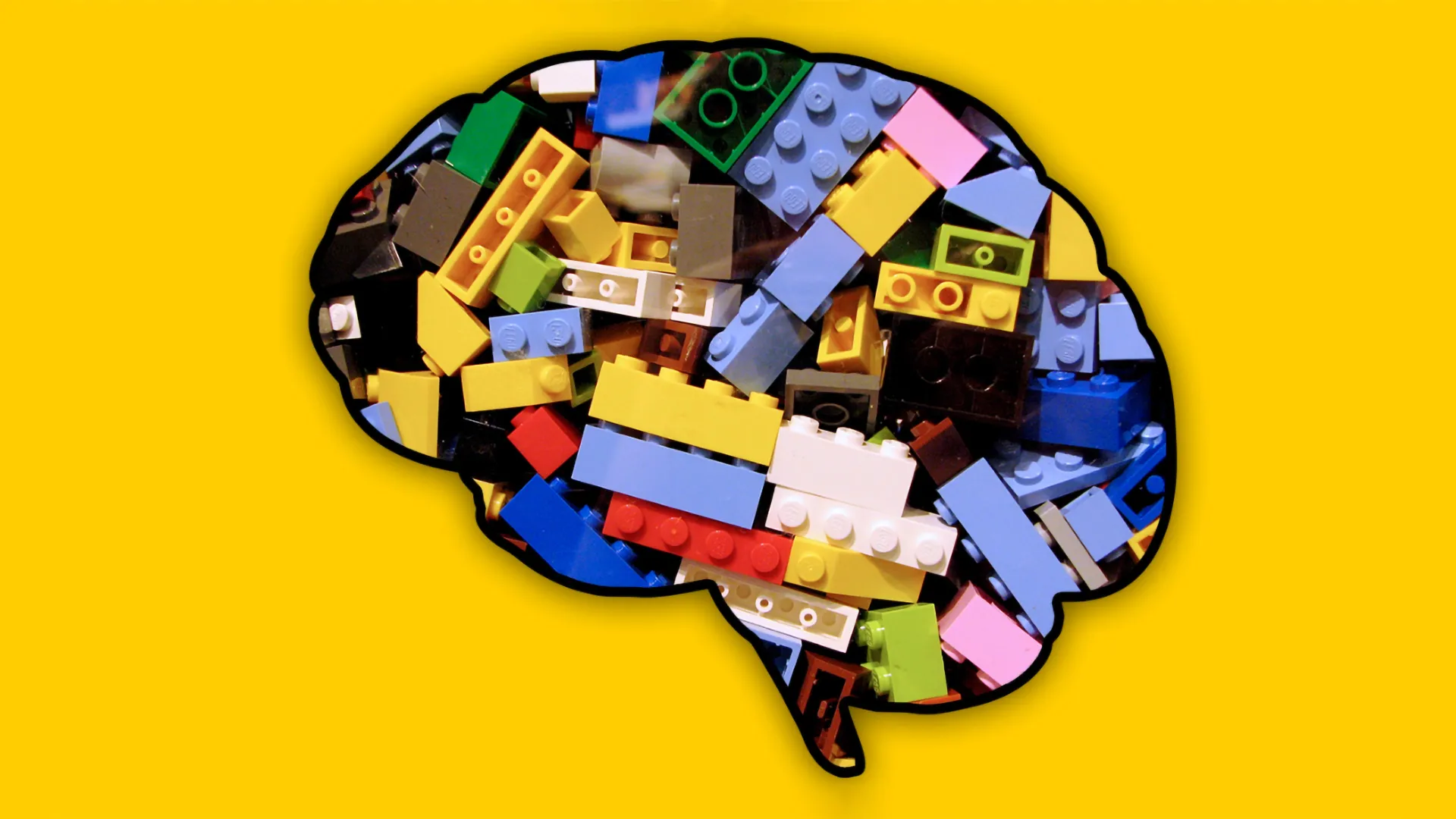
The core of the Princeton team's discovery revolves around identifying these fundamental cognitive components. "State-of-the-art AI models can reach human, or even super-human, performance on individual tasks. But they struggle to learn and perform many different tasks," explained Dr. Tim Buschman, senior author of the study and associate director of the Princeton Neuroscience Institute. "We found that the brain is flexible because it can reuse components of cognition in many different tasks. By snapping together these 'cognitive Legos,' the brain is able to build new tasks."
This analogy of "cognitive Legos" vividly illustrates how the brain operates. Instead of learning every new task from scratch, it leverages a library of established mental modules. When faced with a new challenge, the brain doesn't reinvent the wheel; it intelligently assembles pre-existing mental functions in novel configurations. This efficiency is a cornerstone of human adaptability, allowing individuals to quickly grasp new computer software, master an unfamiliar recipe, or learn the rules of a complex game with relative ease.
The Power of Compositionality in Human Learning
The ability to construct new skills from simpler, familiar ones, drawing from related past experiences, is a cognitive phenomenon known as compositionality. It's a foundational aspect of how humans learn and innovate. Consider the example of someone who already possesses the skill of tuning a bicycle. When presented with the task of repairing a motorcycle, the learning curve is significantly reduced because many underlying principles and motor skills are transferable. The brain doesn't treat it as an entirely alien endeavor but rather as an extension or recombination of existing competencies.
Dr. Sina Tafazoli, a postdoctoral researcher in the Buschman lab at Princeton and the lead author of the new study, further elaborated on this concept. "If you already know how to bake bread, you can use this ability to bake a cake without relearning how to bake from scratch," Dr. Tafazoli stated. "You repurpose existing skills – using an oven, measuring ingredients, kneading dough – and combine them with new ones, like whipping batter and making frosting, to create something entirely different." This seamless integration of old and new skills highlights the brain's compositional prowess, a stark contrast to many AI systems that often require extensive retraining for even minor task variations.
Despite the intuitive nature of compositionality in human experience, direct neurological evidence for how the brain supports this flexible, combinatorial thinking has historically been limited and, at times, ambiguous. The Princeton research aimed to provide a clearer, more definitive picture of this intricate brain function.
Experimental Design: Probing Cognitive Flexibility in Action
To meticulously investigate this phenomenon, Dr. Tafazoli and Dr. Buschman designed a sophisticated experiment involving two male rhesus macaques. The choice of non-human primates is critical in neuroscience, as their brain structures and cognitive processes share significant similarities with humans, making them excellent models for studying complex brain functions. While recording activity across their brains, the macaques were trained to perform three interconnected visual categorization tasks, designed to test their cognitive flexibility in a controlled environment.
Instead of real-world activities like baking or bike repair, which are difficult to quantify neurologically, the animals engaged with a series of abstract visual stimuli. On a screen, they observed "colorful, balloon-like blobs." Their objective was to categorize each blob based on two distinct features: its shape (whether it resembled a bunny or the letter "T") or its color (whether it appeared more red or more green). The tasks were designed to be challenging, with varying degrees of clarity in the visual cues. Some images presented obvious distinctions, while others were ambiguous, demanding careful judgment and fine-tuned categorization skills.
To communicate their decisions, the monkeys indicated their answer by shifting their gaze to one of four specific directions on the screen. For instance, in one version of the task, looking left might signify a judgment that the blob was bunny-like, while looking right indicated a "T"-like appearance.
Shared Components and Task Variations
A pivotal aspect of the experimental design was the deliberate creation of tasks that shared key components while maintaining distinct rules. This allowed the researchers to isolate and observe how the brain reused specific neural patterns. For example: For more details, see AI learning.
- One of the color categorization tasks and the shape categorization task required the animals to use the same eye movement directions to report their choices.
- Both color categorization tasks, conversely, asked the monkeys to categorize color in an identical manner (as either more red or more green), but crucially, required them to look in different directions when signaling their color judgment.
This ingenious design enabled the researchers to precisely track whether the brain activated and reused identical neural patterns, or "cognitive building blocks," whenever the tasks shared certain operational features. By carefully manipulating these shared and divergent elements, the team could discern the neurological signature of compositionality.
The Prefrontal Cortex: A Hub for Reusable Cognitive Blocks
Upon analyzing the intricate patterns of brain activity, Dr. Tafazoli and Dr. Buschman made a significant discovery. They found that the prefrontal cortex (PFC), a region located at the front of the brain renowned for its role in high-level thinking, executive functions, and decision-making, contained several recurring patterns of activity. These patterns emerged consistently whenever groups of neurons collaborated towards a common objective, such as the discrimination of colors.
Dr. Buschman aptly referred to these recurring patterns as the brain's "cognitive Legos" – a foundational set of building blocks that can be flexibly combined and reconfigured to generate a diverse array of behaviors. This finding strongly suggests that the prefrontal cortex serves as a central hub for storing and manipulating these fundamental cognitive units.
"I think about a cognitive block like a function in a computer program," Dr. Buschman elaborated. "One set of neurons might discriminate color, and its output can be mapped onto another function that drives an action. That organization allows the brain to perform a task by sequentially performing each component of that task." This computational analogy underscores the modular and efficient nature of brain function, where discrete mental operations can be chained together to achieve complex goals.
For example, in one of the color tasks, the brain would seamlessly integrate a cognitive block responsible for determining the image's color with another block that guided specific eye movements. When the animal transitioned to a different task, such as judging shapes instead of colors while still utilizing similar eye movements, the brain simply activated the cognitive block for shape processing in conjunction with the block for those same eye movements. This elegant sharing of functional modules across tasks dramatically enhances the brain's efficiency and adaptability.
Crucially, this observed sharing of cognitive blocks was predominantly localized to the prefrontal cortex. Other brain regions did not exhibit this phenomenon to the same extent, strongly indicating that this type of compositionality is a distinctive and specialized feature of the prefrontal cortex. This reinforces the PFC's critical role in executive control and flexible problem-solving.
The researchers also made another intriguing observation: the prefrontal cortex appeared to actively suppress or "quiet" certain cognitive blocks when they were not relevant to the current task. This selective suppression is vital for maintaining cognitive focus and preventing interference from extraneous information. "The brain has a limited capacity for cognitive control," Dr. Tafazoli explained. "You have to compress some of your abilities so that you can focus on those that are currently important. Focusing on shape categorization, for example, momentarily diminishes the ability to encode color because the goal is shape..." This mechanism allows the brain to allocate its limited cognitive resources effectively, optimizing performance on the task at hand.
Implications for Artificial Intelligence and Beyond
The Princeton study's findings, published on November 26 in the esteemed journal Nature, hold significant implications that extend far beyond pure neuroscience. For the field of artificial intelligence, this research offers a biological blueprint for developing more adaptable and generally intelligent systems. Current AI models often excel within narrow domains but struggle with generalization and "out-of-distribution" tasks – situations that deviate even slightly from their training data. This lack of compositional learning is a major bottleneck in achieving human-level AI.
By understanding how the brain constructs and reuses cognitive blocks, AI researchers can begin to design neural network architectures that mimic this biological efficiency. Imagine AI systems that don't need to be entirely retrained for every new variation of a task but can instead combine pre-learned "functions" or modules to tackle novel problems. This could lead to AI that learns faster, requires less data, and exhibits greater cognitive flexibility, moving closer to the versatile intelligence observed in humans.
Furthermore, this research contributes to our fundamental understanding of cognitive processes, shedding light on how we acquire new skills, solve complex problems, and navigate an ever-changing world. It underscores the incredible elegance and efficiency of the brain's architecture, built upon a foundation of reusable, modular components. As AI continues its rapid advancement, insights from neuroscience, particularly studies like this one from Princeton University, will remain invaluable in guiding the path toward truly intelligent and adaptable machines.
Conclusion
The discovery of the brain's "cognitive blocks" in the prefrontal cortex marks a significant milestone in neuroscience. It provides a compelling explanation for the human brain's remarkable capacity for flexible learning and adaptability, a capability that continues to outpace even the most advanced artificial intelligence. By revealing the neural underpinnings of compositionality, this research not only deepens our appreciation for the biological mechanisms of intelligence but also offers a powerful roadmap for engineers and computer scientists striving to build the next generation of truly intelligent and adaptable AI systems. The intricate dance of these cognitive Legos within our brains ensures that we remain unparalleled masters of learning and adaptation.
❓ Frequently Asked Questions
Q: What is the main finding of the Princeton University study?A: The study identified that the human brain, specifically the prefrontal cortex, uses reusable "cognitive blocks" or neural patterns. These blocks can be combined and recombined to facilitate flexible learning and adaptation across various tasks, a process known as compositionality.
This article is an independent analysis and commentary based on publicly available information.
Comments (0)