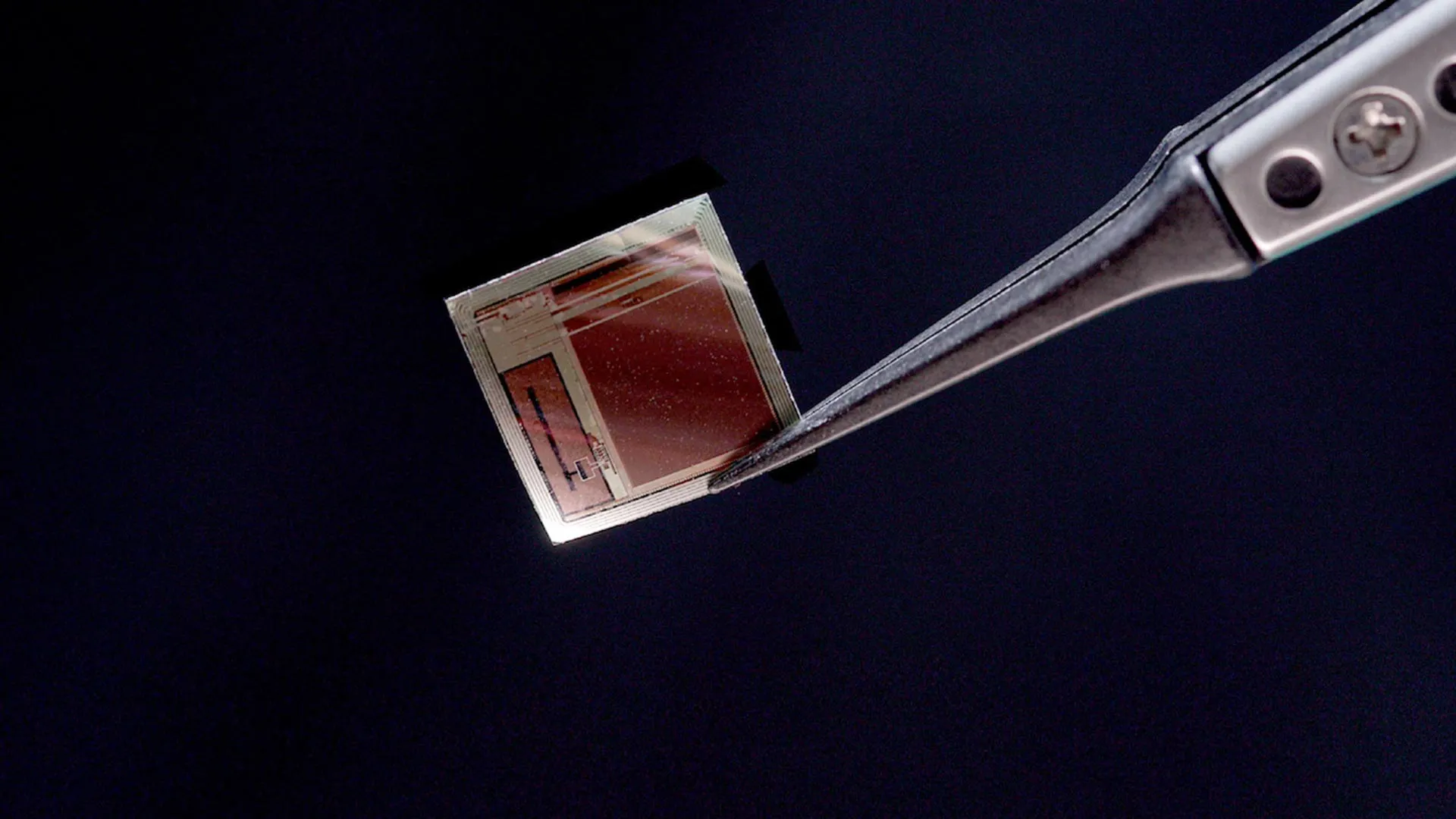
- A new, ultra-small brain chip, BISC, offers high-bandwidth, minimally invasive neural communication.
- Developed through a collaboration led by Columbia and Stanford, it integrates complex electronics onto a single silicon chip.
- Potential applications include treating drug-resistant epilepsy, spinal cord injuries, ALS, stroke, and restoring motor/sensory functions.
- The technology significantly advances current brain-computer interfaces by maximizing data flow and minimizing surgical impact.
A New Era for Brain-Computer Interfaces Dawns with BISC
In a significant stride for neurotechnology, scientists have introduced a novel brain implant poised to redefine the landscape of human-computer interaction and offer transformative therapeutic possibilities for a range of neurological conditions. This innovative device, known as the Biological Interface System to Cortex (BISC), establishes a minimally invasive, high-throughput communication pathway directly to the brain. Its developers anticipate it could play a pivotal role in managing conditions such as epilepsy, aiding recovery from spinal cord injuries and strokes, and potentially restoring vital motor, speech, and visual capabilities for individuals living with conditions like ALS or blindness. This breakthrough was initially reported by Science Daily AI.
The profound promise of this advanced brain-computer interface (BCI) stems from its unprecedented miniaturization combined with its remarkable capacity for high-speed data transmission. The BISC system is the result of a collaborative effort involving leading institutions including Columbia University, NewYork-Presbyterian Hospital, Stanford University, and the University of Pennsylvania. At its core lies a single silicon chip, forming a wireless, high-bandwidth link between the intricate neural networks of the brain and external computing systems.
Unveiling BISC: A Technical Marvel in Miniaturization
The architectural details of the BISC system, encompassing the chip-based implant, an external wearable "relay station," and the requisite operational software, were meticulously outlined in a study published on December 8 in the prestigious journal Nature Electronics. A key differentiator of BISC from conventional implantable systems is its compact design. "Most implantable systems are built around a canister of electronics that occupies enormous volumes of space inside the body," explained Ken Shepard, Lau Family Professor of Electrical Engineering, professor of biomedical engineering, and professor of neurological sciences at Columbia University. Shepard, a senior author who spearheaded the engineering aspects of the project, further elaborated, "Our implant is a single integrated circuit chip that is so thin that it can slide into the space between the brain and the skull, resting on the brain like a piece of wet tissue paper." This description highlights the device's exceptional thinness and flexible nature, designed to conform gently to the brain's surface.
The BISC system represents a radical departure from existing medical-grade BCIs, which typically rely on an array of separate microelectronic components—such as amplifiers, data converters, and radio transmitters. These components often necessitate housing within a relatively large implanted canister, requiring more invasive surgical procedures, sometimes involving the removal of a portion of the skull or placement in another body region like the chest, with wires extending to the brain. In stark contrast, the entire BISC system is integrated onto a single complementary metal-oxide-semiconductor (CMOS) integrated circuit. This chip has been thinned to an astonishing 50 micrometers and occupies less than one-thousandth the volume of a standard implant, boasting a total size of approximately 3 mm3. This micro-electrocorticography (µECoG) device is remarkably equipped with 65,536 electrodes, 1,024 recording channels, and 16,384 stimulation channels, enabling an unprecedented level of neural interaction.
Transforming the Cortex into a High-Bandwidth Interface
The innovative design of BISC effectively transforms the cortical surface into a highly efficient portal for communication. Professor Andreas S. Tolias, PhD, a professor at the Byers Eye Institute at Stanford University and co-founding director of the Enigma Project, worked closely with Shepard as a senior and co-corresponding author. Tolias's extensive background in training AI systems with large-scale neural recordings, including those gathered by BISC, was instrumental in analyzing the implant's efficacy in decoding brain activity. "BISC turns the cortical surface into an effective portal, delivering high-bandwidth, minimally invasive read-write communication with AI and external devices," stated Tolias. He emphasized the chip's scalability, noting it "paves the way for adaptive neuroprosthetics and brain-AI interfaces to treat many neuropsychiatric disorders, such as epilepsy."
The single-chip integration is a monumental achievement in medical implantables, mirroring the evolution of computing power from room-sized machines to pocket-sized devices. "Semiconductor technology has made this possible, allowing the computing power of room-sized computers to now fit in your pocket," Shepard remarked. "We are now doing the same for medical implantables, allowing complex electronics to exist in the body while taking up almost no space." This integration encompasses a radio transceiver, a wireless power circuit, digital control electronics, power management, data converters, and all necessary analog components for both recording and stimulation.
A crucial element of the BISC system is its external relay station, which provides both power and data communication via a custom ultrawideband radio link. This link achieves a remarkable throughput of 100 Mbps—a speed at least 100 times greater than any other wireless BCI currently available. Operating akin to an 802.11 WiFi device, the relay station seamlessly bridges any computer to the implanted brain chip, facilitating robust and rapid data exchange.
Revolutionizing Neurological Treatment and Recovery
The clinical implications of the BISC brain chip are vast and potentially life-changing. Dr. Brett Youngerman, an assistant professor of neurological surgery at Columbia University and neurosurgeon at NewYork-Presbyterian/Columbia University Irving Medical Center, served as the project's primary clinical collaborator. "This high-resolution, high-data-throughput device has the potential to revolutionize the management of neurological conditions from epilepsy to paralysis," Dr. Youngerman asserted. The team, including Dr. Youngerman, Shepard, and NewYork-Presbyterian/Columbia epilepsy neurologist Dr. Catherine Schevon, recently secured a National Institutes of Health grant to specifically explore BISC's application in treating drug-resistant epilepsy—a condition where conventional medications are ineffective.
The device's capacity to deliver high-bandwidth neural data is critical for advanced medical interventions. "The key to effective brain-computer interface devices is to maximize the information flow to and from the brain, while making the device as minimally invasive in its surgical implantation as possible. BISC surpasses previous technology on both fronts," Dr. Youngerman added. For conditions like epilepsy, precise and real-time monitoring of brain activity can allow for adaptive stimulation to prevent seizures. In cases of spinal cord injury or stroke, the ability to decode complex intentions from brain signals could enable more intuitive control of advanced prosthetics or robotic exoskeletons, facilitating the restoration of motor functions. Similarly, for individuals with ALS, the brain chip could offer a direct communication channel, bypassing impaired speech muscles, while for the visually impaired, it holds potential for novel forms of visual prosthetics.
The Power of Interdisciplinary Collaboration
The success of the BISC project underscores the critical importance of interdisciplinary collaboration, bringing together experts from engineering, neuroscience, and clinical medicine. The integration of advanced semiconductor manufacturing methods, specifically TSMC's 0.13-μm Bipolar-CMOS-DMOS (BCD) technology, was pivotal. This fabrication process combines three distinct semiconductor technologies onto a single chip, enabling the creation of complex mixed-signal integrated circuits that can handle digital logic, high-current, and high-voltage analog functions simultaneously. This industrial-scale manufacturing capability means the BISC brain chip is suitable for large-scale production, paving the way for wider accessibility and impact.
Beyond its hardware, the BISC system incorporates its own instruction set and a comprehensive software environment, effectively forming a specialized computing platform for brain interfaces. The high-bandwidth recording capabilities demonstrated in the study allow for brain signals to be processed by sophisticated machine learning and deep learning algorithms. These algorithms are designed to interpret complex intentions, perceptual experiences, and various brain states, moving closer to a future where direct neural communication is both practical and precise.
Looking Ahead: The Future of Neurotechnology
The development of the BISC brain chip marks a pivotal moment in neurotechnology. By integrating all necessary components onto a single piece of silicon, the research team has demonstrated a pathway towards brain interfaces that are not only smaller and safer but also dramatically more powerful. "By integrating everything on one piece of silicon, we
Related Resources:
This article is an independent analysis and commentary based on publicly available information.
Comments (0)