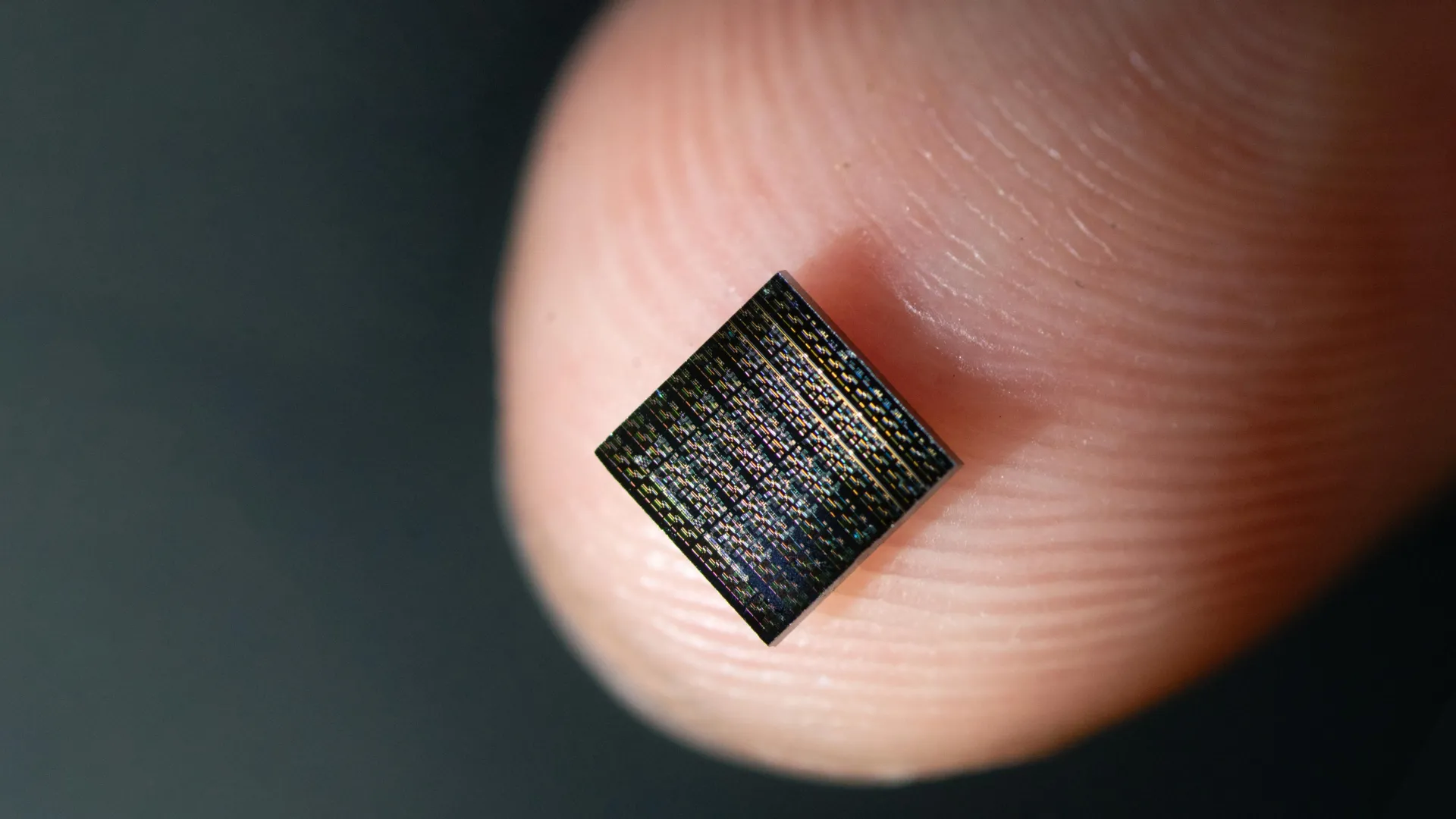
* USC scientists developed artificial neurons that physically mimic the electrochemical behavior of real brain cells, unlike previous simulations. * The innovation utilizes "diffusive memristors" that employ ion motion for computation, mirroring biological neural communication. * This breakthrough promises significantly smaller, more energy-efficient chips, potentially reducing AI's massive power consumption. * The technology fosters hardware-based learning, bringing artificial intelligence closer to achieving human-like artificial general intelligence (AGI).
In a significant advancement for the field of artificial intelligence and computing, scientists at the USC Viterbi School of Engineering and the School of Advanced Computing have successfully engineered artificial neurons that precisely replicate the intricate electrochemical processes found in natural brain cells. This pioneering research, detailed in the prestigious journal Nature Electronics, marks a pivotal moment for neuromorphic computing—an innovative approach focused on designing hardware that mirrors the architecture and function of the human brain. The implications of this discovery are profound, potentially leading to dramatically smaller and more energy-efficient computer chips, while also accelerating the journey toward achieving artificial general intelligence (AGI).
Revolutionizing Neuromorphic Computing with Biomimicry
For decades, the quest to build computers that think and learn like humans has driven innovation. Traditional digital processors, while incredibly fast, operate on fundamentally different principles than the biological brain. Even earlier attempts at neuromorphic chips largely relied on mathematical models to simulate brain activity. What sets the USC breakthrough apart, as reported by Science Daily AI, is its commitment to physical reproduction rather than mere simulation.
These novel artificial neurons don't just represent brain activity symbolically; they tangibly recreate biological function. Just as chemical signals trigger activity in natural brains, these artificial counterparts leverage actual chemical interactions to initiate their computational processes. This fundamental shift from abstract modeling to physical emulation opens new avenues for developing truly brain-inspired hardware.
The Genesis of a Breakthrough: Diffusive Memristors
The research, spearheaded by Professor Joshua Yang of USC's Department of Computer and Electrical Engineering, builds upon his foundational work in artificial synapses over a decade ago. At the heart of this new approach lies a device termed a "diffusive memristor." These components are envisioned to pave the way for a new generation of chips that can both complement and significantly enhance traditional silicon-based electronics.
A key distinction lies in the computational medium. While conventional silicon systems rely on the movement of electrons to perform calculations, Yang's diffusive memristors utilize the motion of atoms—specifically ions. This atomic-level interaction more closely mirrors how biological neurons transmit information, promising smaller, more efficient chips that process information in a fundamentally brain-like manner. This paradigm shift holds immense potential for advancing artificial general intelligence (AGI).
Decoding the Brain's Communication: A Chemical-Electrical Dance
To understand the magnitude of this achievement, it's crucial to appreciate the complexity of communication within the human brain. Nerve cells, or neurons, communicate through a sophisticated interplay of electrical and chemical signals. When an electrical impulse reaches the terminal end of a neuron, at a specialized junction known as a synapse, it undergoes a transformation into a chemical signal. This chemical signal then bridges the gap to transmit information to the subsequent neuron. Upon reception, the chemical signal is meticulously converted back into an electrical impulse, which continues its journey through the receiving neuron.
Professor Yang and his team have remarkably replicated this intricate biological process within their artificial devices with striking accuracy. A significant advantage of their innovative design is its compact footprint: each artificial neuron occupies the space equivalent to a single transistor. This represents a monumental improvement over previous designs, which often required tens or even hundreds of transistors to achieve similar functionality.
Ions: The Unsung Heroes of Neural Activity
In the biological realm, charged particles known as ions are indispensable for generating the electrical impulses that drive activity throughout the nervous system. The human brain, for instance, relies on a delicate balance and movement of ions such as potassium, sodium, and calcium to facilitate this essential communication.
In their groundbreaking study, Professor Yang—who also directs the USC Center of Excellence on Neuromorphic Computing—ingeniously employed silver ions embedded within oxide materials. These silver ions were manipulated to generate electrical pulses that precisely mimic natural brain functions, including fundamental cognitive processes like learning, movement, and planning.
Reflecting on the biomimetic approach, Professor Yang notes, "Even though it's not exactly the same ions in our artificial synapses and neurons, the physics governing the ion motion and the dynamics are very similar." This similarity in underlying physics is crucial for achieving the desired brain-like functionality.
He further elaborates on the material choice: "Silver is easy to diffuse and gives us the dynamics we need to emulate the biosystem so that we can achieve the function of the neurons, with a very simple structure." The device, aptly named the "diffusive memristor," derives its name from this critical ion motion and dynamic diffusion facilitated by the use of silver.
Professor Yang emphasizes the rationale behind choosing ion dynamics for building artificial intelligent systems: "because that is what happens in the human brain, for a good reason and since the human brain, is the 'winner in evolution—the most efficient intelligent engine'." This philosophy underscores a deep respect for biological efficiency as a guiding principle for artificial intelligence design.
Addressing AI's Energy Crisis: The Efficiency Imperative
A pressing concern in modern computing, particularly with the rise of large-scale artificial intelligence systems, is energy consumption. Professor Yang highlights this critical issue, stating, "It's not that our chips or computers are not powerful enough for whatever they are doing. It's that they aren't efficient enough. They use too much energy." This inefficiency is particularly stark when considering the megawatts of power consumed by today's supercomputers to process the colossal datasets required for advanced AI training.
Unlike the human brain, which operates on a mere 20 watts—less power than a standard lightbulb—current computing systems were not originally conceived to process vast amounts of data or to learn autonomously from minimal examples. Professor Yang explains, "Our existing computing systems were never intended to process massive amounts of data or to learn from just a few examples on their own. One way to boost both energy and learning efficiency is to build artificial systems that operate according to principles observed in the brain."
Hardware-Based Learning vs. Software-Based Learning
The distinction between hardware-based and software-based learning is central to the USC team's philosophy. While electrons, which power modern computing, are ideal for sheer speed, Professor Yang argues that "Ions are a better medium than electrons for embodying principles of the brain." He explains that electrons, being lightweight and volatile, facilitate software-based learning, which fundamentally differs from the brain's operational model.
In stark contrast, the brain learns by physically moving ions across membranes, achieving an energy-efficient and adaptive learning process directly in its "wetware" or biological hardware. This "hardware-based learning" is exemplified by a young child's ability to recognize handwritten digits after seeing only a few examples, a task that typically demands thousands of examples for a computer to achieve. The human brain accomplishes this remarkable feat while consuming vastly less power than the megawatt-hungry supercomputers of today.
The Path Forward: Challenges and Future Prospects
Professor Yang and his team view this innovative technology as a significant stride toward replicating natural intelligence. However, they acknowledge that the silver ions currently used in these experiments are not yet compatible with standard semiconductor manufacturing processes. Future research will therefore focus on exploring alternative ionic materials that can achieve similar effects while being more amenable to existing industrial fabrication techniques.
The efficiency benefits of these diffusive memristors extend beyond energy to physical size. A contemporary smartphone, for instance, might house around ten chips, each containing billions of transistors that rapidly switch on and off to execute computations. The promise of this new innovation is to drastically reduce this complexity and footprint, enabling more powerful and compact devices.
The development of artificial neurons that precisely mimic biological brain cells represents a monumental leap in neuromorphic computing. By harnessing the power of ion motion and chemical interactions, USC researchers are not only paving the way for significantly more energy-efficient and smaller AI hardware but are also bringing the dream of truly intelligent, brain-inspired machines closer to reality. This work, initially highlighted by Science Daily AI, underscores a future where artificial intelligence operates with the elegance and efficiency of the human mind.
❓ Frequently Asked Questions
Q: What makes these new artificial neurons different from previous designs?A: Unlike earlier neuromorphic chips that primarily simulated brain activity through mathematical models, these new artificial neurons physically reproduce the intricate electrochemical behavior of real brain cells. They use actual chemical interactions, specifically the motion of ions via "diffusive memristors," to perform computations, mirroring how biological neurons communicate.
Q: How do "diffusive memristors" contribute to this breakthrough?A: Diffusive memristors are the core components of this technology. They utilize the movement of atoms, specifically silver ions embedded in oxide materials, to generate electrical pulses. This ion motion closely mimics how biological neurons transmit information, enabling hardware-based learning and significantly improving energy efficiency and device size compared to electron-based computing.
Q: What are the main benefits of this new neuromorphic computing approach?A: The primary benefits include drastically reduced energy consumption, addressing the massive power demands of current AI systems, and significantly smaller chip sizes. By enabling hardware-based learning and more efficient processing, this technology also brings artificial intelligence closer to achieving artificial general intelligence (AGI), which is capable of human-like cognitive abilities.
Q: What challenges remain for this technology to be widely adopted?A: A key challenge highlighted by the researchers is the compatibility of the silver ions currently used with standard semiconductor manufacturing processes. Future work will focus on identifying and developing alternative ionic materials that can achieve similar effects while being more suitable for existing industrial fabrication techniques.
This article is an independent analysis and commentary based on publicly available information.
Comments (0)